

Trénink na Geografickou olympiádu
Milí zájemci o geografii,
těší nás, že máte zájem o aktuální geografická témata. Každý měsíc na této stránce zveřejníme jedno téma, které bude odrážet aktuální dění a potenciálním účastníkům vyšších kol Geografické olympiádu může jeho zpracování pomoci v soutěži uspět. Témata a texty budou záměrně uváděny v angličtině, jelikož v celostátním, a zejména mezinárodním kole geografické olympiády je angličtina hlavním komunikačním jazykem. Kromě rozšiřování vašeho geografického rozhledu si budete v anglickém jazyce rozvíjet i potřebnou slovní zásobu.
Každé téma bude zahrnovat volitelný úkol, který když vyřešíte a vložíte do tohoto formuláře, budete zařazeni do slosování o tričko nebo jiné reklamní materiály Geografické olympiády, PřF UK, PedF MUNI a dalších partnerů*.
Formulář se pro daný úkol otevře vždy 1. den v měsící (tj. např. úkol. č. 6 bude možné nahrávat od 1. do 31. 3. 2026).
Těšíme se na spolupráci.
Tým organizátorů Geografické olympiády.
6. ÚKOL (uzávěrka 31. 3. 2026) - poslední úkol 28. ročníku
Climate Change
Climate change is a set of interconnected phenomena impacting the global climate. A change in one factor, such as an increase in the concentration of carbon dioxide in the atmosphere, usually has several causes and a variety of consequences. Most often, the term refers to the rise in average air temperatures associated with human activity. As you already know, climate action is also one of the UN Sustainable Development Goals.
Task 1: Work with the Climate change atlas: https://faktaoklimatu.cz/assets-local/files/atlas-klimaticke-zmeny.pdf. In the graph on page 23, AVERAGE ANNUAL TEMPERATURE IN THE CZECH REPUBLIC, you can see how the average annual temperature is rising. Describe, and if possible, support with various evidence (photos, data, or other sources), how climate change is manifesting in your place of residence.
Task 2: Climate change is currently a topic widely discussed by the Czech government. Briefly state whether you have noticed what aspects of climate change the Czech government is addressing and what measures it is implementing.
Please submit your completed assignments by the end of March 2026.
Sources: https://faktaoklimatu.cz/
5. ÚKOL (UZÁVĚRKA 28. 2. 2026)
Population of the Czech Republic
In 2025, the lowest number of children born in the Czech Republic since the 18th century was recorded1. This could have a fundamental impact on society. Let's conduct a detailed analysis. Find the number of children born in the regions of the Czech Republic over the past 10 years on the Czech Statistical Office website—specifically for the period 2015–2024 (data for 2025 are not yet complete)—and calculate which region has the most significant decrease in live births. Provide both the data and the calculation. List at least three impacts this change might have in the future. Also, look at the population projection for the Czech Republic and evaluate whether it is being fulfilled.
4. ÚKOL (UZÁVĚRKA 31. 1. 2026)
No Poverty
Nearly half of the world’s population lives in poverty, and the lack of food and access to clean water kills thousands of people every single day1. Therefore, Goal 1 of the UN Sustainable Development Goals focuses on reducing poverty; Target 1.1 is entitled “Eradicate extreme poverty.” This means that by 2030, extreme poverty – currently measured as people living on less than $1.25 a day – should be eradicated worldwide.
To explore how people live in different parts of the world, use the following website:
https://www.gapminder.org/dollar-street
Task instructions:
- In the first step, focus on families with a monthly income between 25 and 50 USD. Choose one family that interests you and explore how they live.
- In the second step, find a family from the Czech Republic and compare their life with that of the family selected in the first step. Write a short text describing the differences between the two families’ lives.
- Finally, select “MAP” from the menu in the top-right corner. Assess whether the distribution of families on the website is evenly spread across continents. Do you think the information presented on the website is up-to-date and relevant?
Please submit your completed assignments by the end of January 2026.
Sources:
Gapminder. (n.d.). Dollar Street. Získáno z https://www.gapminder.org/dollar-street
1 The Global Goals. (n.d.). Goal 1: No Poverty. Získáno z https://globalgoals.org/goals/1-no-poverty/
3. ÚKOL (uzávěrka 31. 12. 2025)
Conflicts in the world
Peace represents a fundamental precondition for a dignified human life, as it provides the stability required for societal well-being and the absence of fear, violence, and disruption. Without peace, the realization of the United Nations Sustainable Development Goals becomes unattainable, since armed conflict undermines economic development, weakens access to education and healthcare, and obstructs effective environmental governance. Nevertheless, numerous conflicts persist across the world.
Please study this map displaying current global conflicts https://www.cfr.org/global-conflict-tracker and complete the following tasks:
- Create a graph illustrating the number of conflicts on each continent.
- Choose one conflict that you find particularly interesting and study the background information provided when clicking on the map. If additional information is needed, use further reputable sources. Answer shortly these questions:
- When did the conflict begin?
- What are the causes of the conflict?
- Who are the main actors involved in the conflict?
- What is the role of the national government in the conflict?
- Are any external actors are involved in the conflict?
Finally, write down your own reflections and opinions regarding the conflict.
Please send your completed assignments by the end of December 2025.
2. ÚKOL (uzávěrka 30. 11. 2025)
Energy Production and Consumption
Energy is essential for human beings because it powers everything from homes and transportation to industries and communication. Without energy sources, the development and well-being of societies around the world would not be possible. The United Nations Sustainable Development Goal No. 7 is called “Affordable and Clean Energy”, and it aims to ensure access to affordable, reliable, sustainable and modern energy for all[1].
Read the text about Energy Production and Consumption: https://ourworldindata.org/energy-production-consumption and complete the following tasks:
- Create a graph showing primary energy consumption in Czechia in 1984 – 1994 – 2004 – 2014 – 2024.
- Make your own table to compare energy use per person in 2024 in Czechia with last iGeo organiser countries: Thailand, Ireland, Indonesia, France, China.
Briefly interpret the results.
Please send your completed assignments by the end of November 2025.
1. ÚKOL (uzávěrka 31. 10. 2025)
OSN Sustainable Development Goals[1]
The United Nations Sustainable Development Goals (SDGs) are a set of 17 global goals designed to address major social, economic, and environmental challenges by 2030. Geography is closely connected to the SDGs because it studies the relationships between people, places, and environments across the world.
Geography helps us understand where problems such as poverty, hunger, and climate change occur, why they happen in certain regions, and how they affect people and ecosystems differently. For example, geographical research can show how rising sea levels threaten coastal communities (Goal 13: Climate Action) or how urban growth influences access to clean water and sanitation (Goal 6: Clean Water and Sanitation).
By using tools like maps, spatial data, and fieldwork, geographers can monitor progress towards the SDGs, identify inequalities between regions, and support sustainable planning. In this way, geography provides essential knowledge and skills for creating solutions and making informed decisions that help achieve the SDGs.
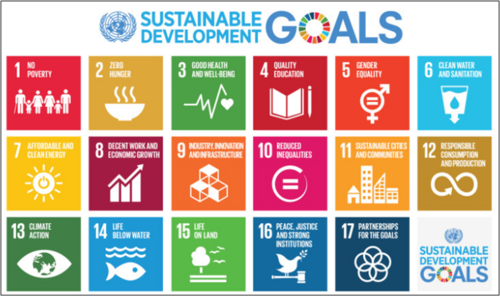
Your task is to study information about the Sustainable Development Goals on this website https://sdgs.un.org/goals. Then choose one of the goals and write up to 300 words on how you personally can contribute to achieving the desired goal. You can add a maximum of one graphic feature (map, graph, photo) to support your thinking.
Please send us your proposal by the end of October 2025.
* Pozn.: ceny a materiály jsou zasílány pouze po České republice, do zahraniční bohužel odesílání není možné.